
How to Manage a Poker Bankroll in 2026 (Cash, MTT, Home Games)
A practical, math-backed guide to bankroll management for poker players in Europe and worldwide — buy-in rules, stop-loss, currency, and tracking.
Bankroll management (BRM) is the single biggest predictor of whether a winning player stays winning. Skill puts you in the green. BRM keeps you there through variance.
What is a poker bankroll, really?
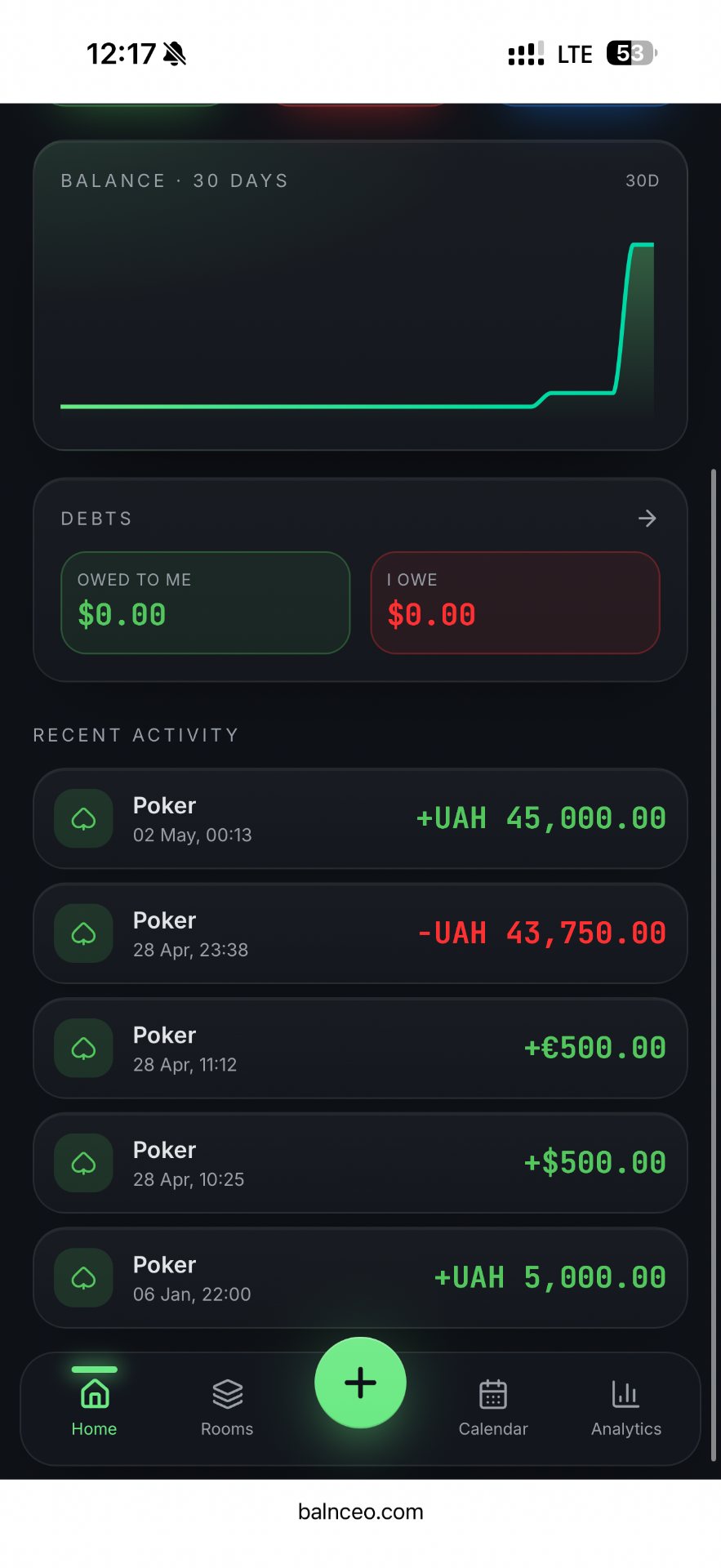
Your bankroll is the money you have set aside *only* for poker. Not your rent. Not your "fun money". A dedicated, separate balance you can track to the cent. If you can't say what your bankroll is right now within 5%, you don't have one.
Buy-in rules that actually hold up
The classic rules are still close to optimal for most recreational and semi-pro players:
- NL cash (live): 20–30 buy-ins for the stake you play. €2/€5 → at least €2,000 dedicated.
- NL cash (online): 30–50 buy-ins. Variance is higher because pools are tougher and pace is faster.
- MTTs: 100–200 buy-ins. Yes, really. Tournament variance is brutal.
- Spin & Go / hyper-turbos: 200+ buy-ins.
If you can't meet these, drop a stake. There is no ego prize for going broke at €1/€2.
Stop-loss and stop-win
A stop-loss is a maximum loss per session — typically 2–3 buy-ins. When you hit it, you leave. Tilt is real and measurable; the equity you give up after losing 3 buy-ins in one session is enormous.
A stop-win is more controversial but useful in live cash where game quality drops late at night.
Multi-currency reality in Europe
If you live in the EU and travel, you'll inevitably mix EUR, PLN, CZK, UAH, GBP. Pick a base currency and convert every session at the rate of that day. Don't wait until year-end — your true ROI gets buried in FX noise.
Tracking is non-negotiable
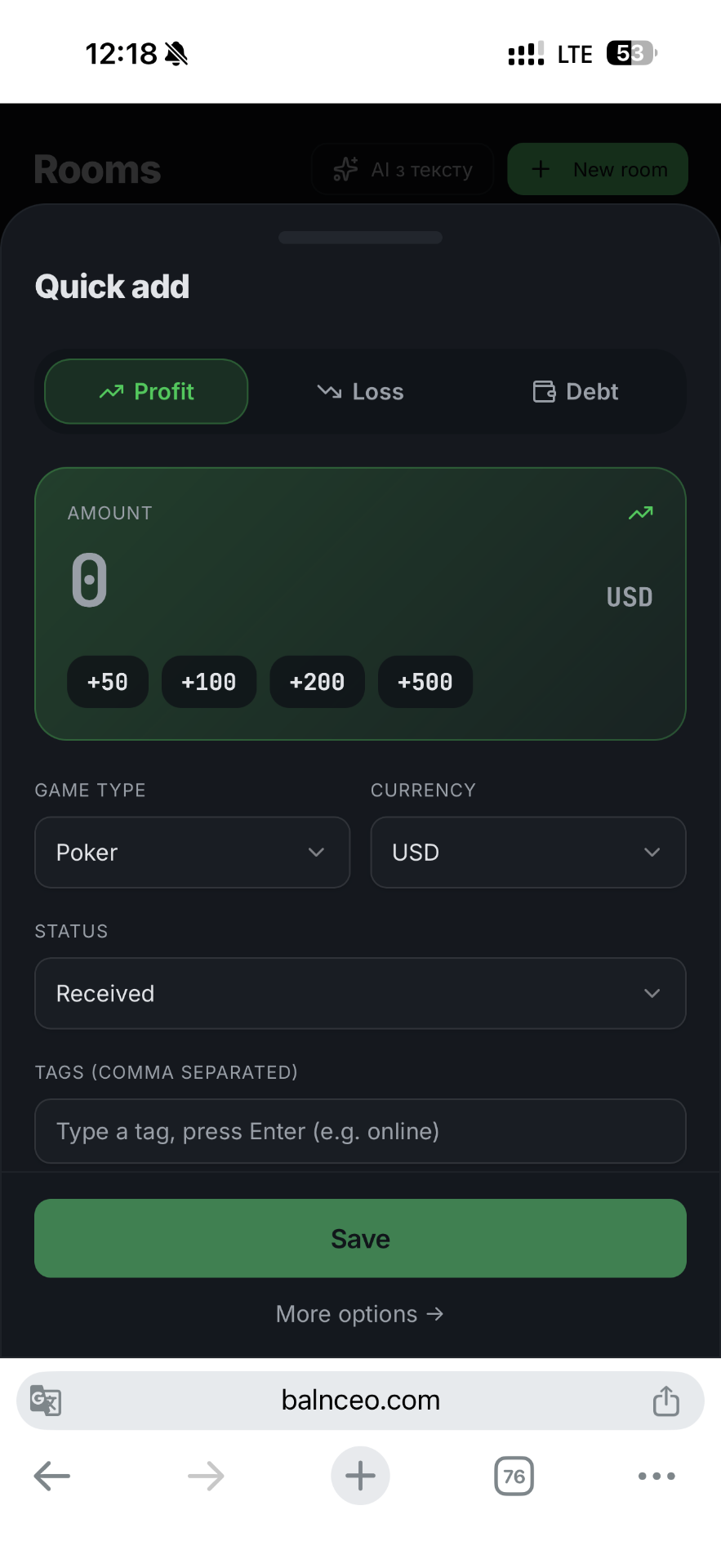
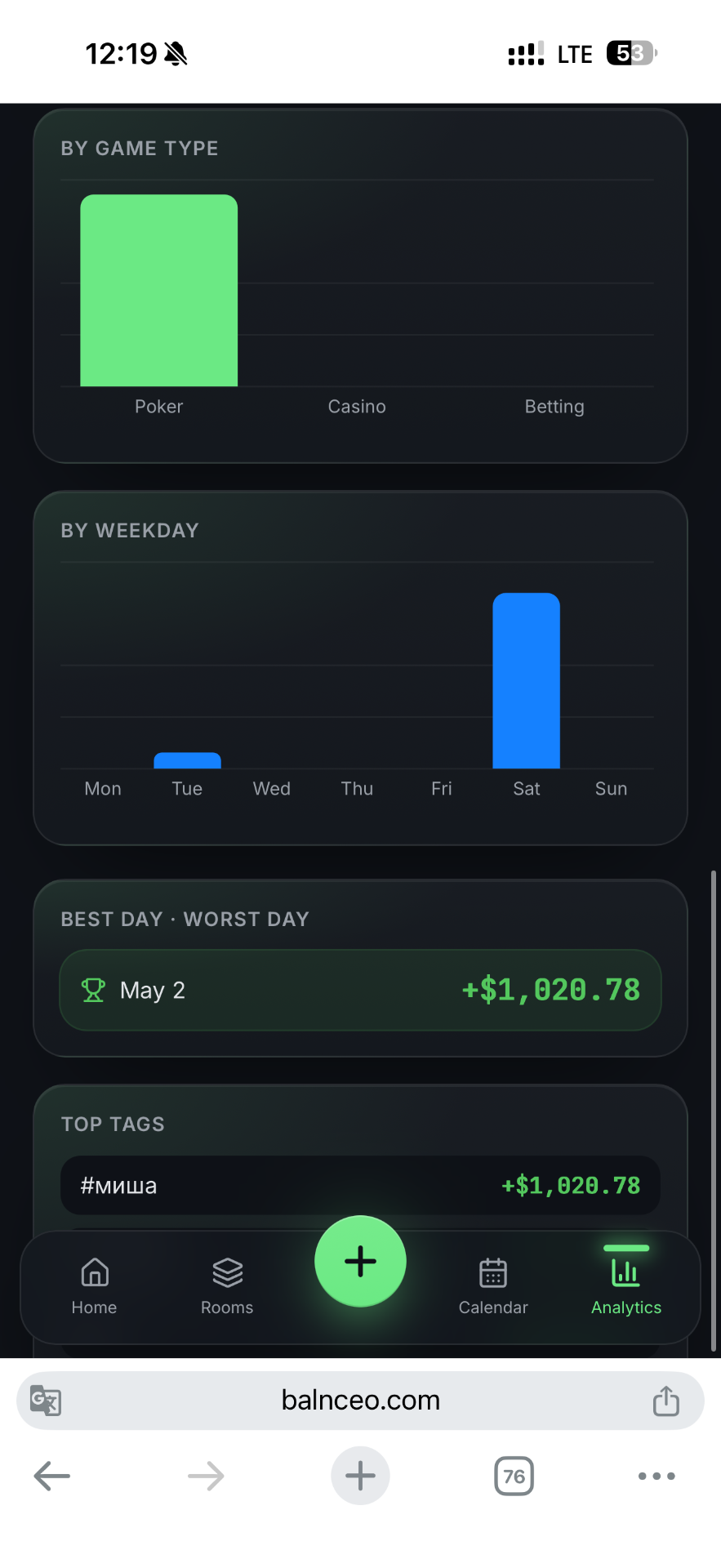
You can't manage what you don't measure. Track every session: stake, location, duration, buy-in, cash-out, notes. Tools like Balnceo let you do this in 10 seconds per session and convert currencies automatically.
The takeaway
Be the CEO of your bankroll. Set rules before you sit down, log every session, review weekly. The players who do this for one year outperform their identical-skill peers who don't — guaranteed.